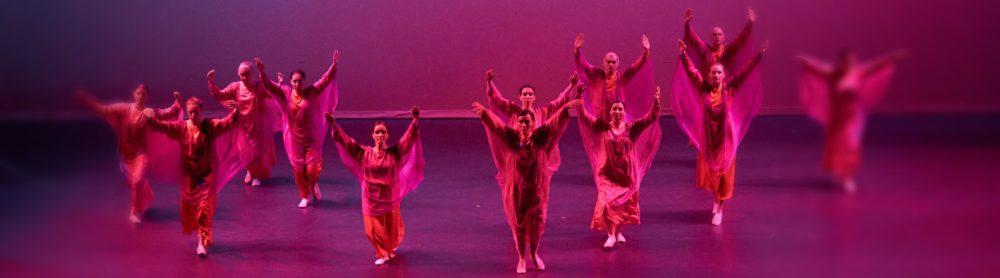
The Rebirth of Poetics out of the Spirit of Eurythmy

Fundamentals of a Goethean Approach to Poetics and Meter
Dr. Hedwig Greiner-Vogel
A summary and translation of Dr. Greiner’s life research, compiled by Cynthia Hoven


“The moving forces of the supersensible nature of the human being prepare the formative speech of poetry.  This hidden eurythmy was, in primeval time, the preparatory step of all language.  Just as all language has arisen out of sacred rituals, so has poetry arisen out of dance, ritual dances, which recreated the path of the stars in manifold, strictly lawful forms.  The rhythms of the stars, which have their microcosmic correspondences in the rhythmic organization, are the primal movement forces of the metered step, the poetic ‘ foot’ and the forms of poetry which have arisen there from.  The meters and poetic forms which have come down to us from ancient cultures still show spurs of these origins, and can become visible once again through eurythmy.”   p. 132

In the art of eurythmy, new perceptions of the nature of poetry are possible.  To assist both eurythmy itself and the enlivening and understanding of poetry, it is necessary to research the basic elements of the latter, namely, sounds, meter, and poetic forms.  Indeed, the study of these should be an integral part of any eurythmy training.

One of the fundamental principles of eurythmy is that speech itself springs out of the spiritual world itself, and that when humans speak, they are expressing their spiritual nature.  Vowels are expressions of the personality, and consonants are the sounds which echo and imitate nature.  The interplay of both, the alphabet, embodies in one sense the totality of the human being.

A study of language reveals an evolution of the relationship to sounds.  Greece, for instance, still ascribed names to its sounds, such as alpha for the first letter.  The Latin alphabet calls the same sound merely ‘a.’  (Such reductionism is also evident in the acronyms which are increasingly common.)  Ancient runes as well as the Hebrew Kaballah reflect the power of single sounds.  It is also said that sounds were danced in ancient cultures: eurythmy is a re-enlivenment of these dances.

Continue reading

What is Eurythmy Doing in School?

Artistic and Therapeutic Eurythmy speak for themselves. What about Educational Eurythmy?

By Mary Watson

The most important educational task of eurythmy is to aid the incarnating processes of the growing child, in order that these processes may take place in the most harmonious way possible; a very lofty ideal, but nevertheless one toward which every eurythmist strives.

Plunge into the world

These processes change and assume different forms in the various stages of childhood. The very young child lives very much in his surroundings; he is ‘at one’ with the world, and it is easy for him to transform himself, through the imaginative pictures of stories, into animals, plants, beings. In these early years he must plunge into and experience to the full the world around him. He must unite himself with every tree, bird and stone, immerse himself in the rhythms of the created world. At this time the eurythmy teacher can lead the class through a Paradise, where they can learn to know the created and the creator.

Between the seventh and ninth year, the child will then begin to stand back and observe the world. He will begin to separate himself from it in his experience and even begin to be critical of things around him. The closer his unity with the world before this time, the more his powers of reverence and wonder will be enhanced during these years of separation from the whole. During this time the spiral form becomes very important in the eurythmy lesson, where the child spirals into his own inner  world, and out once again to the outer world. Repetition of this form with
various verses strengthens the individuality in its first awakening.

Continue reading

Eurythmy in Waldorf Schools

By Robin W. M. Mitchell

At times, the question arises, “What is eurythmy, and why is it so important in Waldorf education?” In an attempt to answer these questions, I started by looking at a number of definitions of education. I have synthesized them into the following synopsis: “Education brings about a state of knowledge and of aesthetic moral development, resulting from a learning process which develops skills needed by a person wishing to take charge of his or her own life.” Continue reading

Truus Geraets Turning 80 and Not Yet Finished!

By Lynn Stull

During the fall of 2003, Truus was instrumental in my decision to join the first Frontier Eurythmy Training at Eurythmy Spring Valley. Throughout my training, Truus was a source of encouragement and knowledge. Over the years I have admired Truus’ commitment to the Art of Eurythmy, Rudolf Steiner, Anthroposophy, and particularly her dedication to the Archangels Michael and Uriel, which she has and continues to demonstrate through her deeds. Continue reading